Quinceañera Invitations: Wording, Timing, and the Photo on the Front
Invitations go out six to eight weeks before the party, which means the portrait on the front has to exist months before that. Almost nobody puts that date on the planning list.
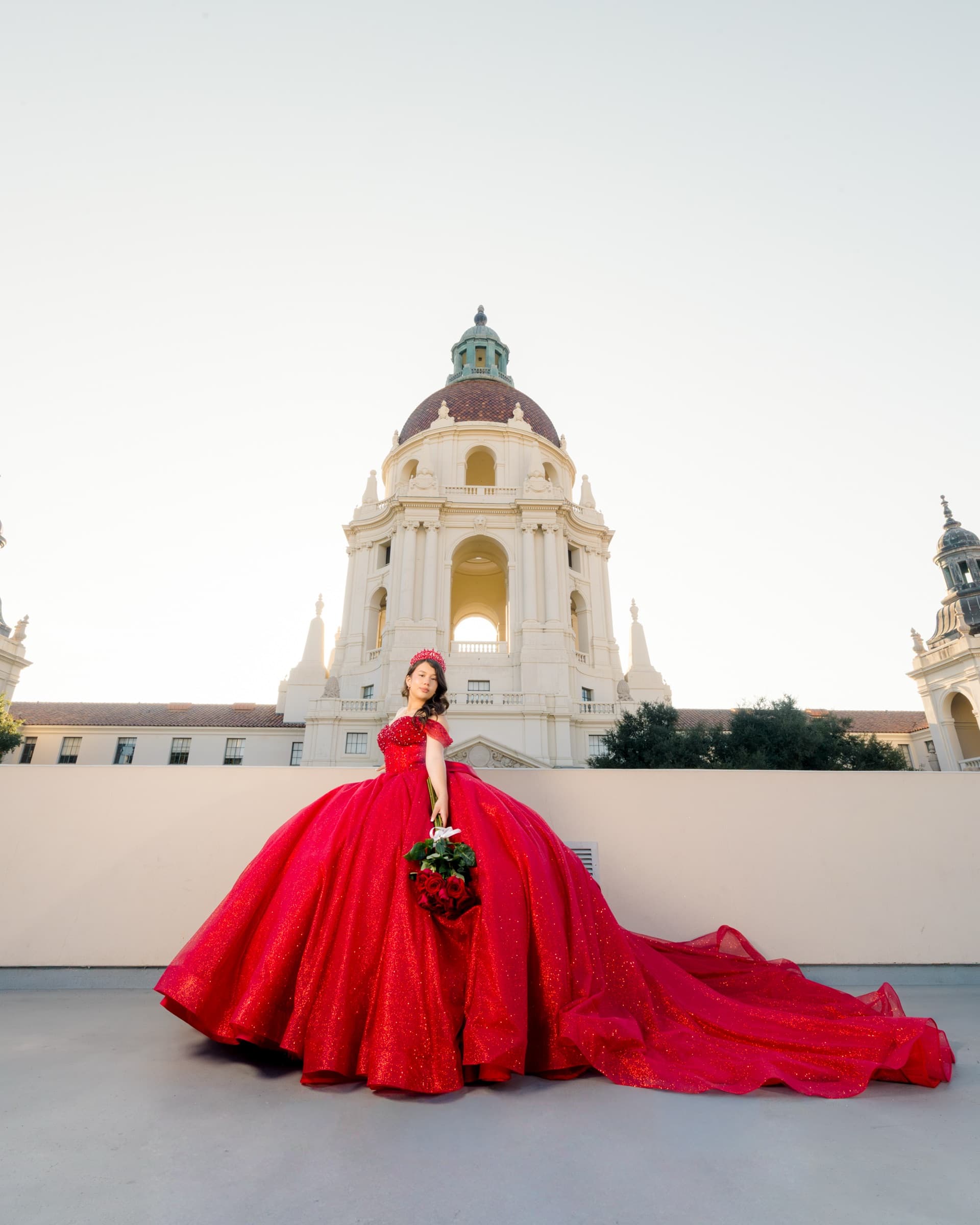
Families ask me about the pre-session at almost exactly the same moment every time: three weeks before the invitations have to go out. By then it is too late to do it well, and the invitation ends up with a phone photo, a stock illustration, or no photo at all.
The invitation is not a photography decision. But it has a photography deadline buried inside it, and that deadline lands about four months before the party — earlier than the dress, earlier than the choreography, earlier than almost anything else families think of as early.
Work the calendar backwards
Start from the day of the celebration and walk back. Guests need six to eight weeks to hold a Saturday, take time off, and buy something to wear. Printers need two to three weeks once the file is approved, and one more round for the proof, and longer in November and December when they are printing everyone's Christmas cards. Whoever designs the card needs the photo before any of that starts.
- 6–8 weeks before the party — invitations in your guests' hands
- 8–10 weeks before — invitations mailed or handed out
- 10–13 weeks before — the printer's turnaround, plus one proof round
- 13–15 weeks before — the final edited portrait goes to whoever is designing the card
- 16–20 weeks before — the pre-session itself, which means the dress is bought and altered by then
That last line is the one that surprises people. If the invitation is going to carry her portrait in the dress, the dress has to be finished about five months out — not the week before the party, which is when most alterations actually get done.
The one-hour pre-session in our quinceañera packages exists for exactly this. It is not a bonus portrait session. It is the invitation, the framed print, the photo on the sign at the entrance, and the picture the family posts the day the date is announced — all of which are needed months before anyone shoots the party itself.
What the wording actually has to say
A quinceañera invitation is doing more work than a birthday card. Traditionally it is issued by the parents, it names the padrinos, and it carries two events at two addresses with two different start times. That is where almost every mistake happens.
- Who is inviting — the parents' names, and the padrinos if they are being honored on the card
- Her full name, and the line that names the occasion: Mis Quince Años
- The misa — parish name, street address, and the time the mass begins
- The reception — the salón, its street address, and the time doors open, which is not the same as the mass time
- The date written out, and the day of the week
- Dress code, in the words you actually mean — formal, semi-formal, or a specific color guests should avoid
- RSVP: a name, a phone number, and a date to reply by
Things that get left off and cause problems on the day: the reception time (guests arrive at the salón while the family is still at church), whether children are invited, and where to park. If the salón shares a lot with anything else, put a parking line on the insert. I have watched families lose twenty minutes of daylight portraits because half the guest list was circling the block.
One language or two
At most of the quinceañeras I photograph in Riverside, Fontana and Moreno Valley, the guest list splits down the middle: the grandparents, the tías and the padrinos read Spanish, and the court's friends and half the parents' coworkers read English. A card in only one language quietly tells one of those groups that the details are somebody else's problem.
Two solutions that work. Spanish on the card and English on a small insert, which keeps the formal card looking traditional. Or a double-sided card, Spanish on one face and English on the other. What does not work is mixing both languages inside the same paragraph — it reads as a mistake rather than a choice.
What makes a good invitation photograph
An invitation photo has a job that a portrait does not: it has to survive having type printed on top of it, at about four by six inches, in one color. That changes how I shoot it.
- Shoot vertical, and looser than feels right — the designer needs room to crop and no way to add it back
- Leave clean, empty space above her head or along one side for the type to sit
- Plain backgrounds: a wall, open sky, a field. Anything busy fights the lettering and loses
- Get both a full-length frame and a three-quarter one. Designers almost always end up using the three-quarter
- Shoot in the last hour of daylight, not at noon — midday sun puts hard shadows under the eyes and blows out a white dress
- Do not shoot it at the salón. Every other photograph from that night already happens there
One more, and it costs nothing: tell me before the session that this frame is going on the invitation. It changes where I stand and how much room I leave, and it is the difference between a photo that had to be cropped to fit and one that was built to.
Where to shoot it
The pre-session is the only part of a quinceañera that is not on a schedule, which means it can go anywhere. I have shot them at Kimberly Crest House in Redlands, where the gardens, the stairs and the stone give you three different backgrounds inside an hour, and at Rancho Quitasueños in Jurupa Valley when a family wants open land and sky instead of architecture. Both are at their best in the last hour of light, which is the hour we want for the invitation anyway.
Ordering: four numbers to get right
- Count by household, not by person. This is the single most common over-order, and it is usually forty cards
- Then add fifteen to twenty extra — for the people who get forgotten, and one to keep
- Ask the printer for the exact pixel dimensions and the color profile before you send the photo file
- Confirm whether the quoted price includes envelopes, inserts and return addresses, or whether those are line items
And order the sign for the entrance, the thank-you cards and the invitation at the same time, from the same photo. Doing it in one pass is cheaper, and it means the card, the sign and the framed print are all the same girl in the same dress on the same evening — which is what makes the whole thing look designed instead of assembled.
There is more on the order of the night in the guide to the traditions, on the court in the guide to chambelanes and damas, on the palette in choosing a theme that photographs well, and on where to hold it in the Inland Empire venue guide. Honest numbers are in what quinceañera photography costs, and this same guide is en español.
I photograph quinceañeras across Riverside, Moreno Valley, Corona and the Inland Empire, in English and Spanish, from $1,800 — every one of them personally.
Continue reading.
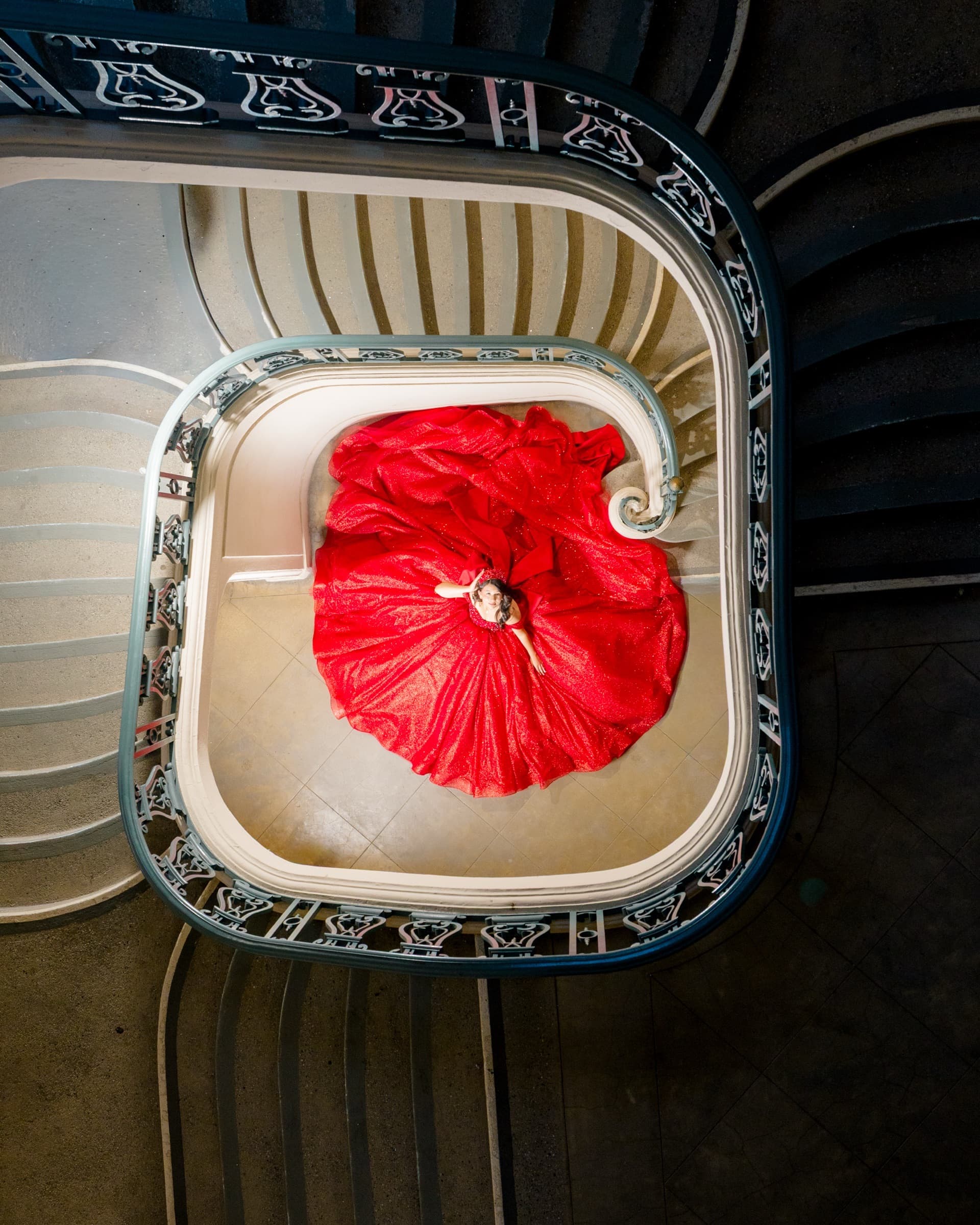
Chambelanes: What They Are and How the Court Actually Works
How many chambelanes, who they should be, and what they actually do on the day — including the part of the court that nobody explains until the week of the waltz.
Read article →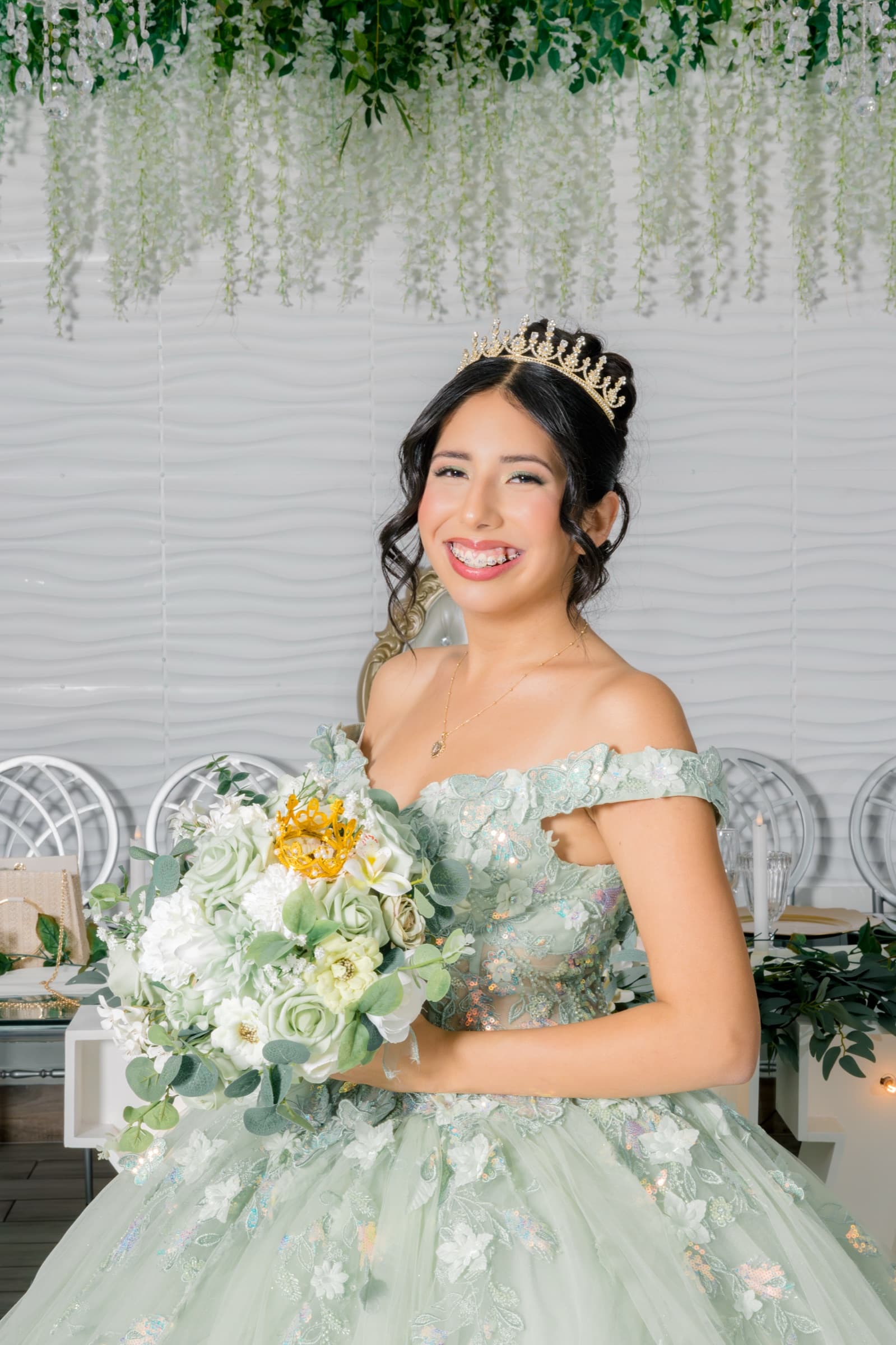
Quinceañera Traditions, Explained One by One
Each tradition has a moment, an order, and a reason. What they mean, when they happen in the night, and how to keep them from being lost in a dark room.
Read article →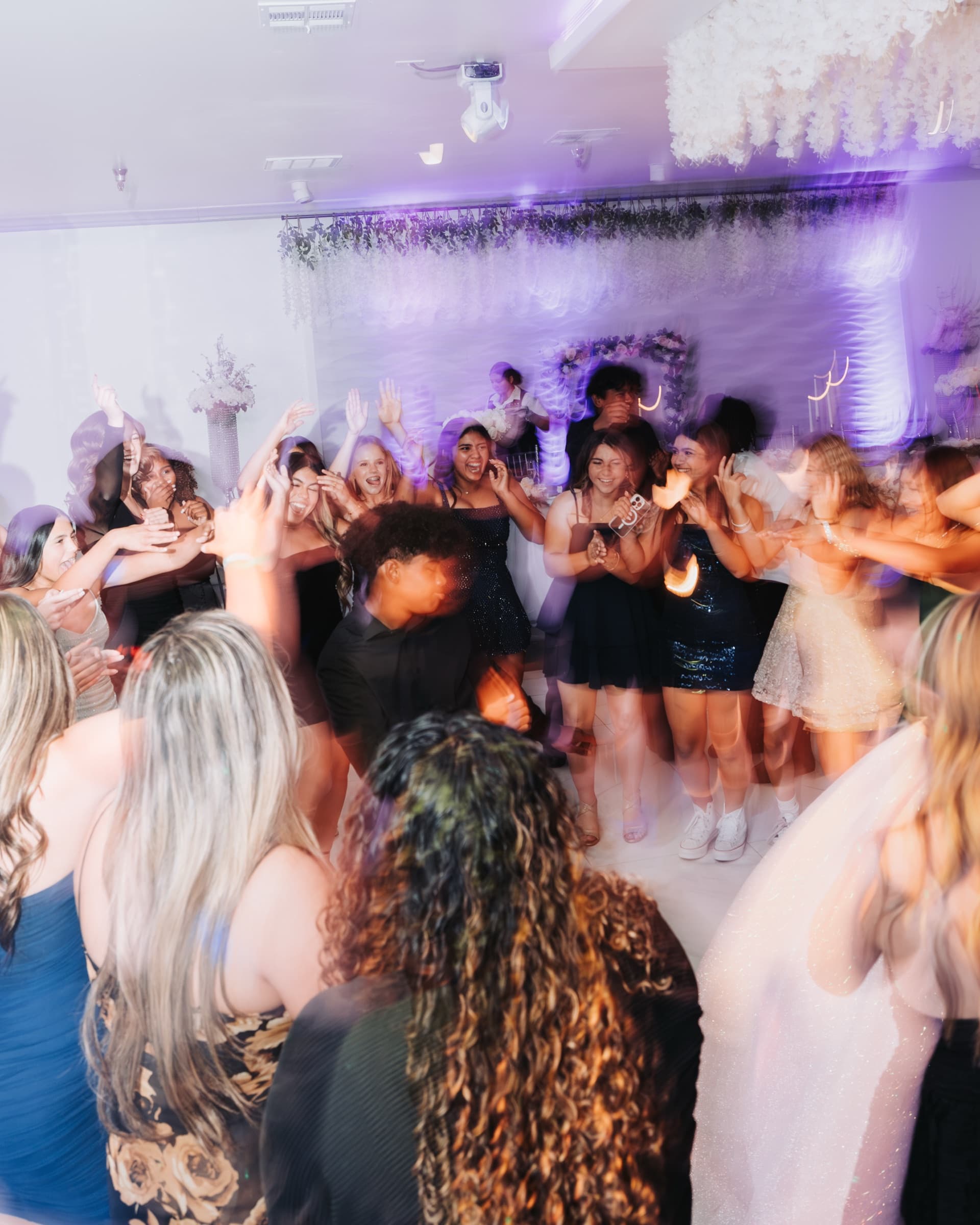
Quinceañera Themes: Choosing Colors That Survive the Room
In a hall with no windows, half the color in your photographs was chosen by the DJ. What that means for the palette you pick nine months earlier.
Read article →Tell us about
your day.
Dates fill quickly. Send a short note about your wedding — date, venue if you have one, and what you're hoping for. We reply within 24 hours.
Riverside, California · Inland Empire · Southern California