Chambelanes: What They Are and How the Court Actually Works
How many chambelanes, who they should be, and what they actually do on the day — including the part of the court that nobody explains until the week of the waltz.
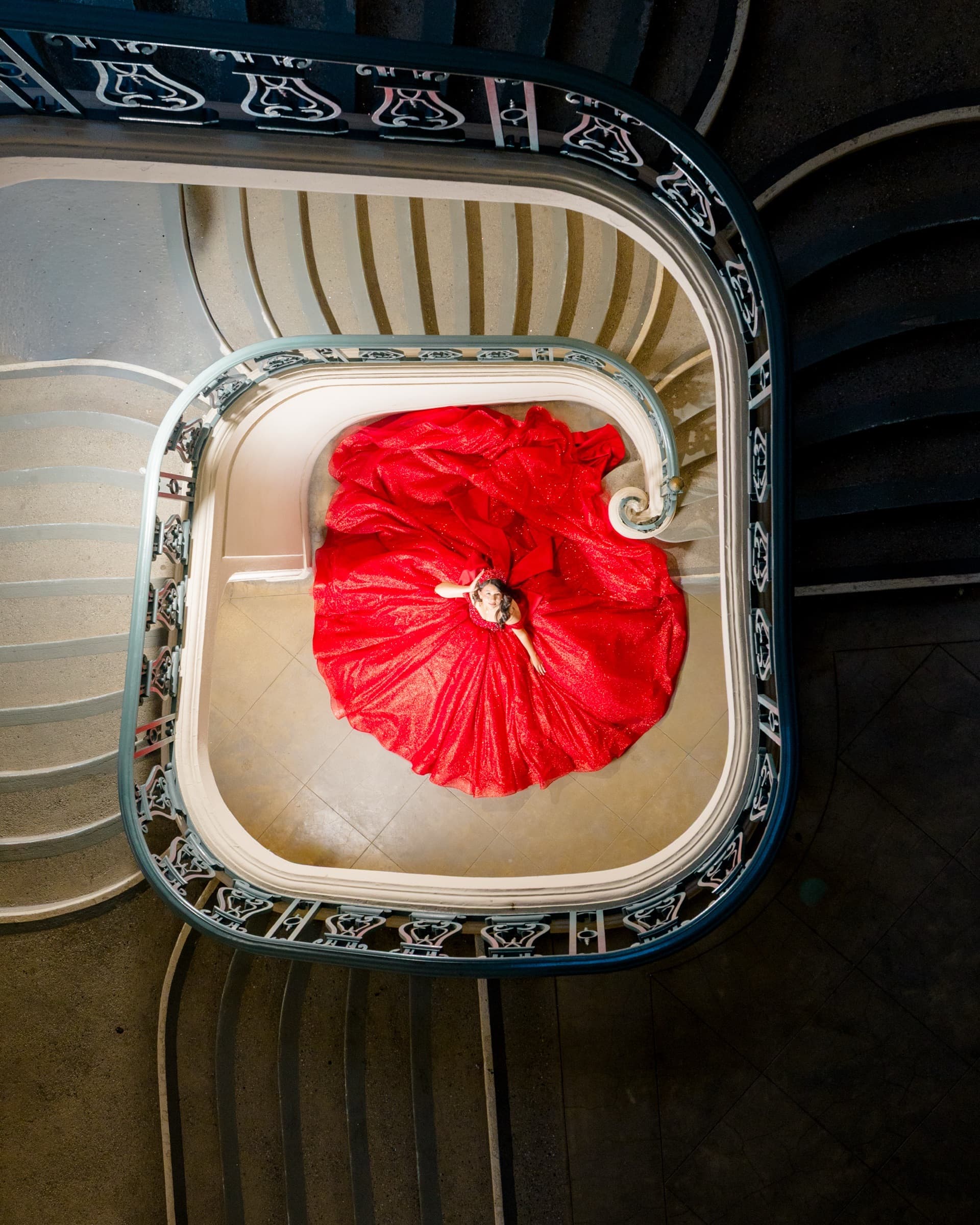
A chambelán is a young man in the quinceañera's court of honor — an escort who walks with her, dances the waltz, and is part of the formal presentation. Damas are the young women in the same court. Together they are the corte de honor, and they are the reason a quinceañera looks like a production rather than a birthday party.
We photograph quinceañeras most weekends across Riverside and the Inland Empire, and the court is where the day either flows or falls apart. This is what we would tell a family sitting down to plan one.
How many chambelanes?
The traditional number is fourteen — seven damas and seven chambelanes, one pair for each year of the quinceañera's life, with the girl herself as the fifteenth. Plus a chambelán de honor, her main escort, who is often a brother, cousin, or close friend.
In practice, almost nobody does fourteen anymore. Most of the courts we photograph are between four and eight people total, and a growing number are just a chambelán de honor and nobody else. Both are correct. Fourteen is tradition, not obligation, and a small court that shows up to rehearsals beats a large one that does not.
- Traditional: 7 damas + 7 chambelanes + chambelán de honor
- Common today: 3–5 pairs, plus a chambelán de honor
- Increasingly common: a chambelán de honor alone, or an all-dama court
- Also fine: cousins on one side, friends on the other — nobody is auditing it
What they actually do on the day
The court is not decorative. They have four real jobs, and each one is a photograph:
- The entrance — the court is presented first, in pairs, then the quinceañera
- The vals — the choreographed waltz, usually the most rehearsed three minutes of the year
- The baile sorpresa — the surprise dance, which is where the night actually turns
- Escorting her through the formal moments: the toast, the cambio de zapatilla, the última muñeca
Between those, they are her people. Some of the frames families print are not the choreography at all — they are the court laughing in the parking lot before the entrance, or a chambelán fixing his tie badly.
Choosing the court
Two pieces of advice we give every family. First, pick for reliability over closeness — the friend who shows up to every rehearsal is worth more on the day than the cousin who is technically closer to you. Second, decide the pairs early and do not change them, because the choreographer builds the vals around specific heights and specific people.
And be honest about the age range. A court that mixes eight-year-olds with nineteen-year-olds looks charming and rehearses badly; the little ones are usually happier as pajecitos than as part of the choreography.
The part nobody warns you about
Rehearsals. A vals takes six to ten sessions to look effortless, and the surprise dance takes more. Families who start choreography two months out are calm the week of; families who start three weeks out are not.
The second thing: someone will drop out. It happens on almost every court we photograph, usually within a month of the date. Build the choreography so that losing one pair does not collapse the formation, and tell the choreographer that up front.
What this means for the photographs
Court photos need daylight and space, and both are usually gone by the time the reception starts. Ask for twenty minutes with the full court before the party — outside, before the entrance — and you get the formal group portrait that families frame. Left until the salón, it becomes a dark room and a crowd.
The other one: tell your photographer where the surprise dance formation faces, before it starts. There is usually one angle where the whole court reads and every other angle where half of them are backs. There is more on how the evening runs in our guide to the traditions, and a planning guide for the whole day.
We cover quinceañeras across Riverside, Moreno Valley, Corona and the Inland Empire, in English and Spanish, from $1,800 — see the packages.
Continue reading.
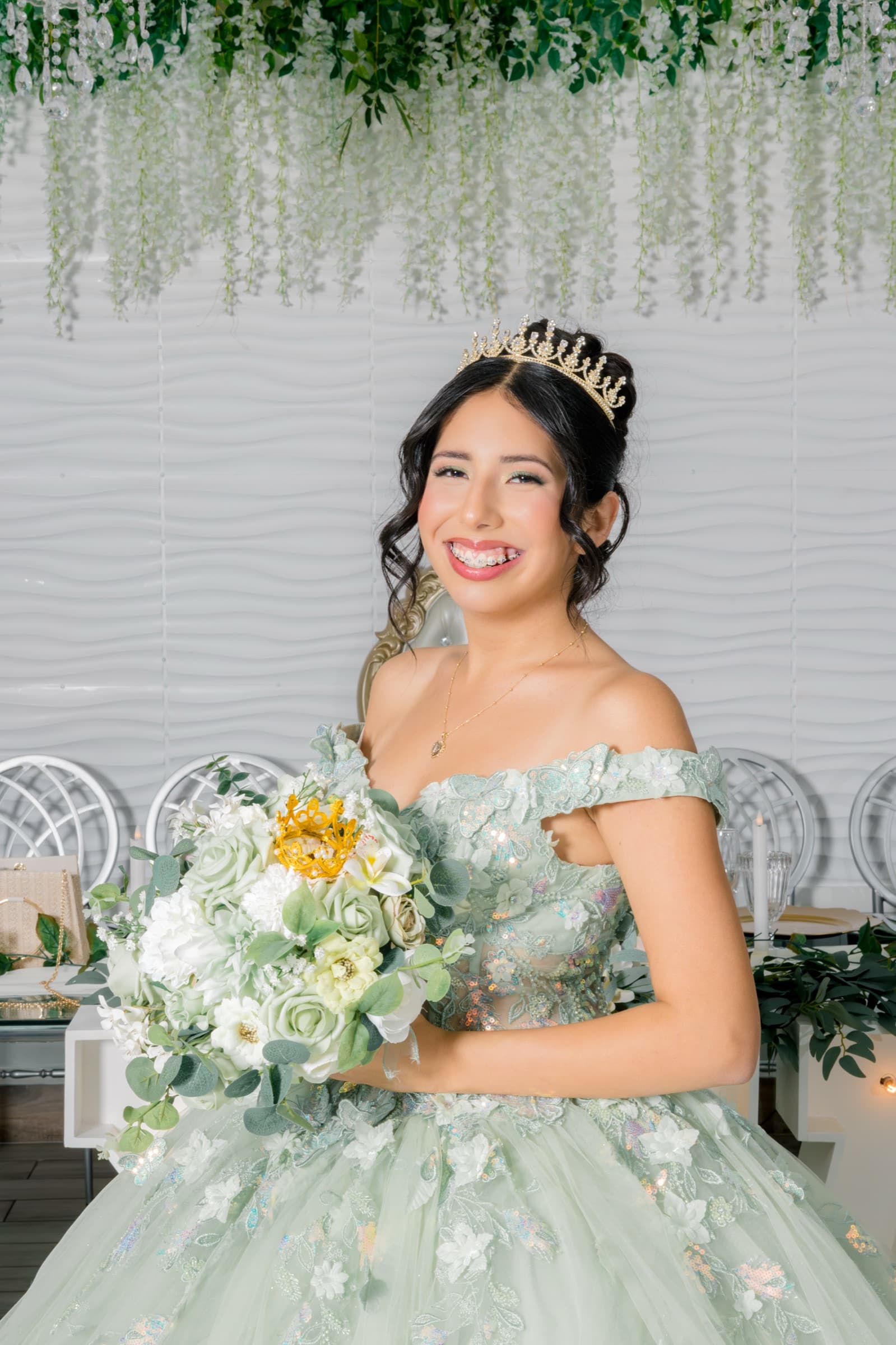
Quinceañera Traditions, Explained One by One
Each tradition has a moment, an order, and a reason. What they mean, when they happen in the night, and how to keep them from being lost in a dark room.
Read article →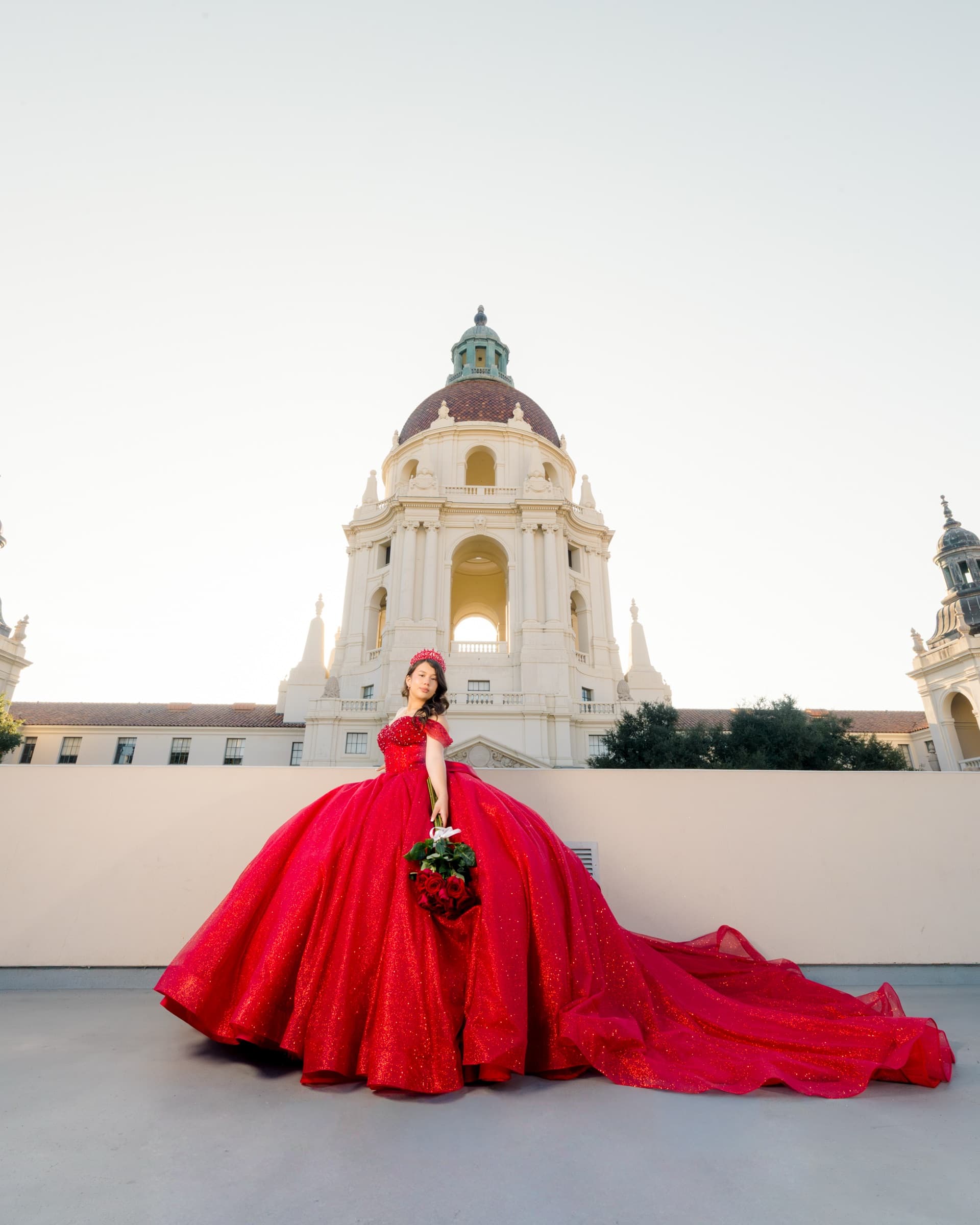
Quinceañera Invitations: Wording, Timing, and the Photo on the Front
Invitations go out six to eight weeks before the party, which means the portrait on the front has to exist months before that. Almost nobody puts that date on the planning list.
Read article →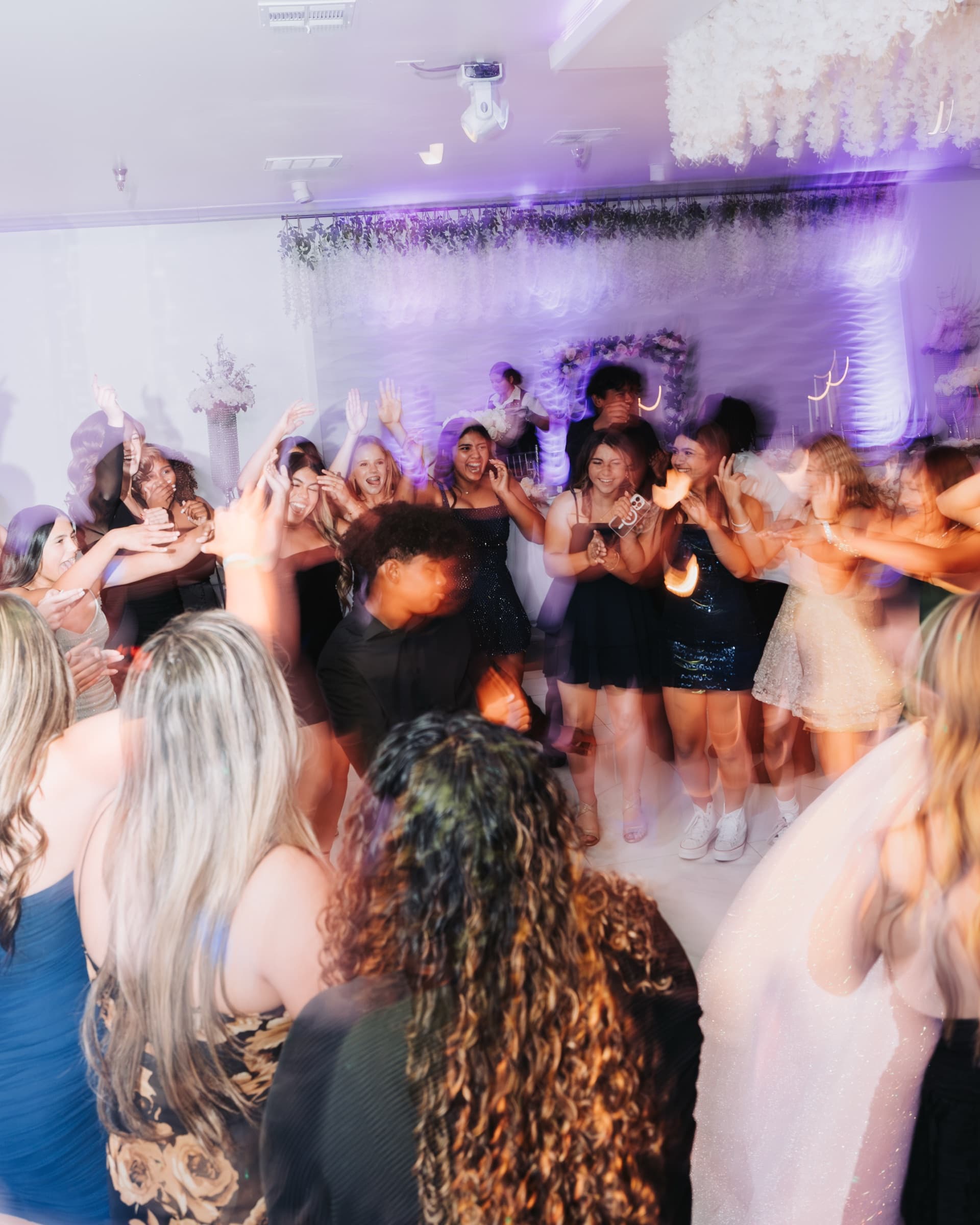
Quinceañera Themes: Choosing Colors That Survive the Room
In a hall with no windows, half the color in your photographs was chosen by the DJ. What that means for the palette you pick nine months earlier.
Read article →Tell us about
your day.
Dates fill quickly. Send a short note about your wedding — date, venue if you have one, and what you're hoping for. We reply within 24 hours.
Riverside, California · Inland Empire · Southern California